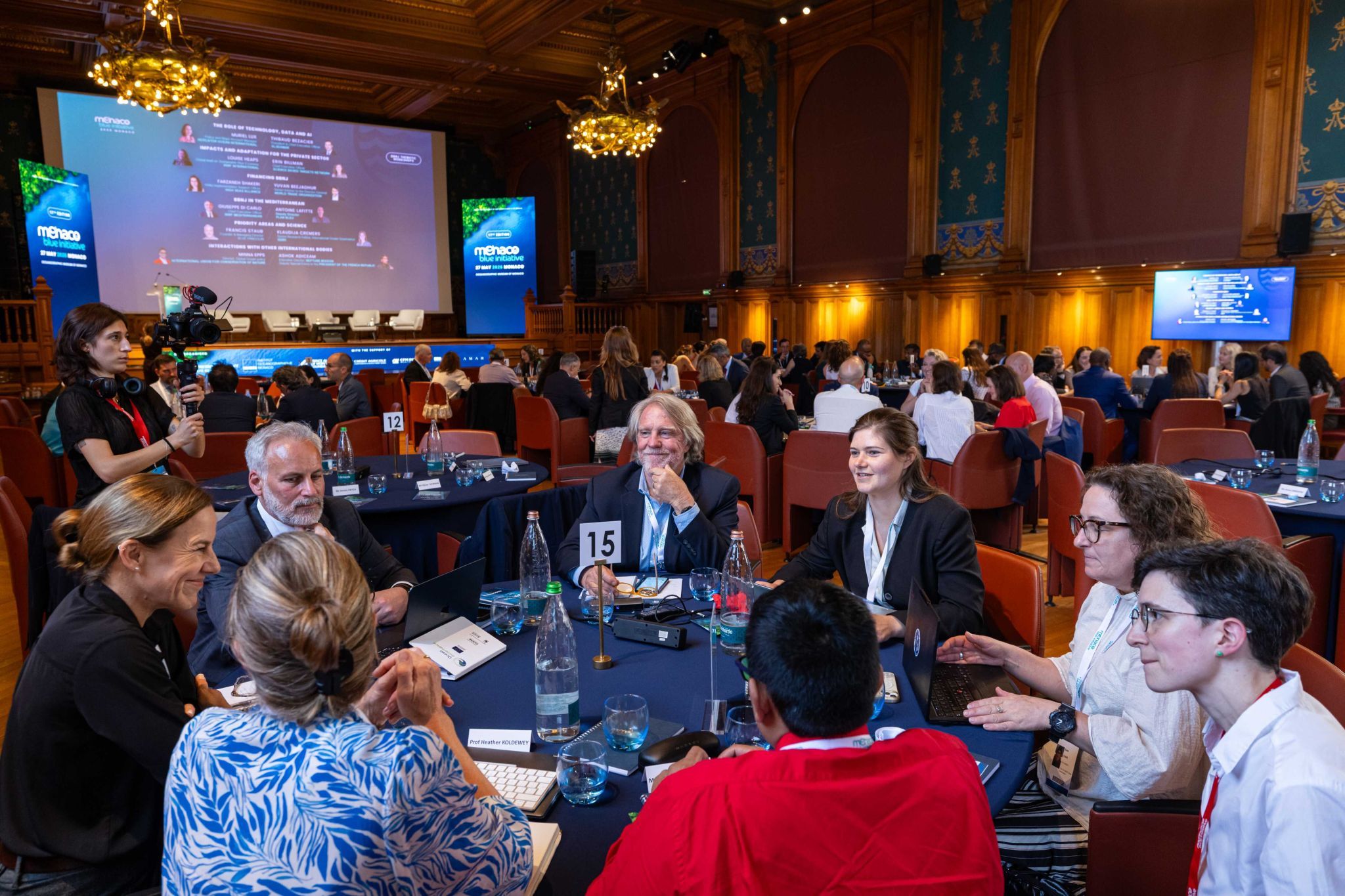
Francis, Managing Director of Blue Pangolin Consulting, attended the 17th edition of the Monaco Blue Initiative, held at the Oceanographic Museum of Monaco on 27 May 2026. Convened by the Oceanographic Institute and the Prince Albert II of Monaco Foundation, the gathering brought together governments, international organisations, scientists, investors and conservation practitioners at the intersection of ocean governance, finance and multilateral action.
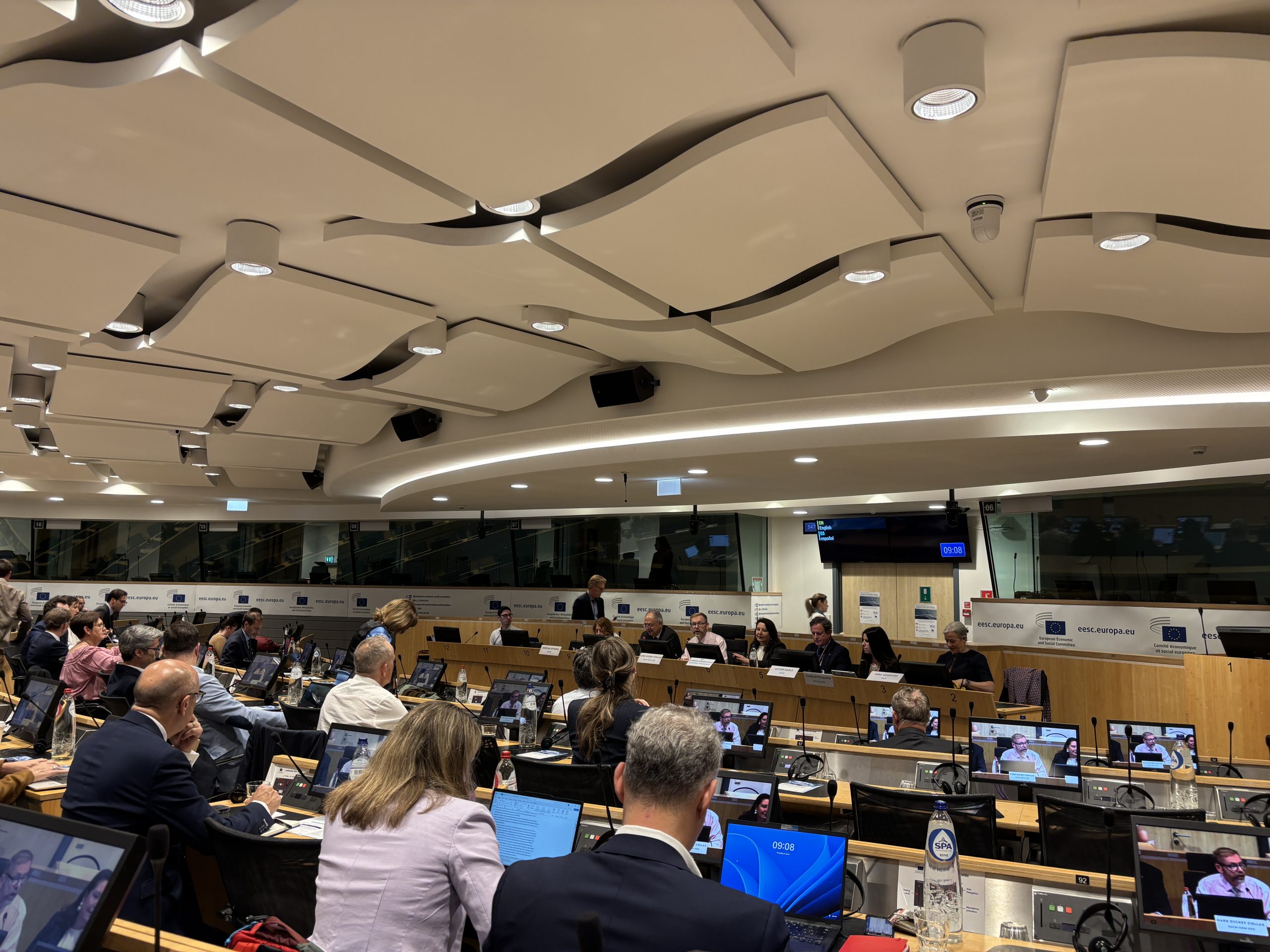
In addition, Senior Project Manager, Tom, attended a high-level conference in Brussels on 2 June 2026 examining how the Agreement on Biodiversity Beyond National Jurisdiction (BBNJ) will interact with relevant legal instruments and frameworks and relevant global, regional, subregional and sectoral bodies (IFBs), including Regional Fisheries Management Organisations (RFMOs). Convened by the European Bureau for Conservation and Development (EBCD) in partnership with the European Economic and Social Committee (EESC), and supported by the Chair of the European Parliament Committee on Fisheries (PECH), the event brought together RFMO secretariats, the European Commission, the European Parliament, Member States, United Nations bodies and the fisheries sector for a day of productive exchange.
The 17th Monaco Blue Initiative
A gathering at a critical moment
The Monaco Blue Initiative has become one of the more influential annual forums for ocean policy and finance. This year’s edition arrived at a significant point in the international calendar, with the Agreement on Biodiversity Beyond National Jurisdiction (BBNJ) now in force and the first Conference of the Parties (COP1) anticipated in early 2027.
Across the day, discussions returned consistently to a shared priority: moving from international commitments to concrete action for the ocean. Sessions ranged from the post-2025 ocean agenda and the consolidation of recent milestones, through the governance and financing of the blue economy, to the practical steps required to implement the BBNJ Agreement and to take forward marine protected areas on the high seas. A recurring message was that stronger cooperation, clearer governance and more effective financial tools are all needed if recent commitments are to translate into lasting change.
Breakout discussions on BBNJ implementation
A notable feature of this edition was a series of short breakout discussions, with each table examining a different component of BBNJ implementation in the lead-up to COP1:
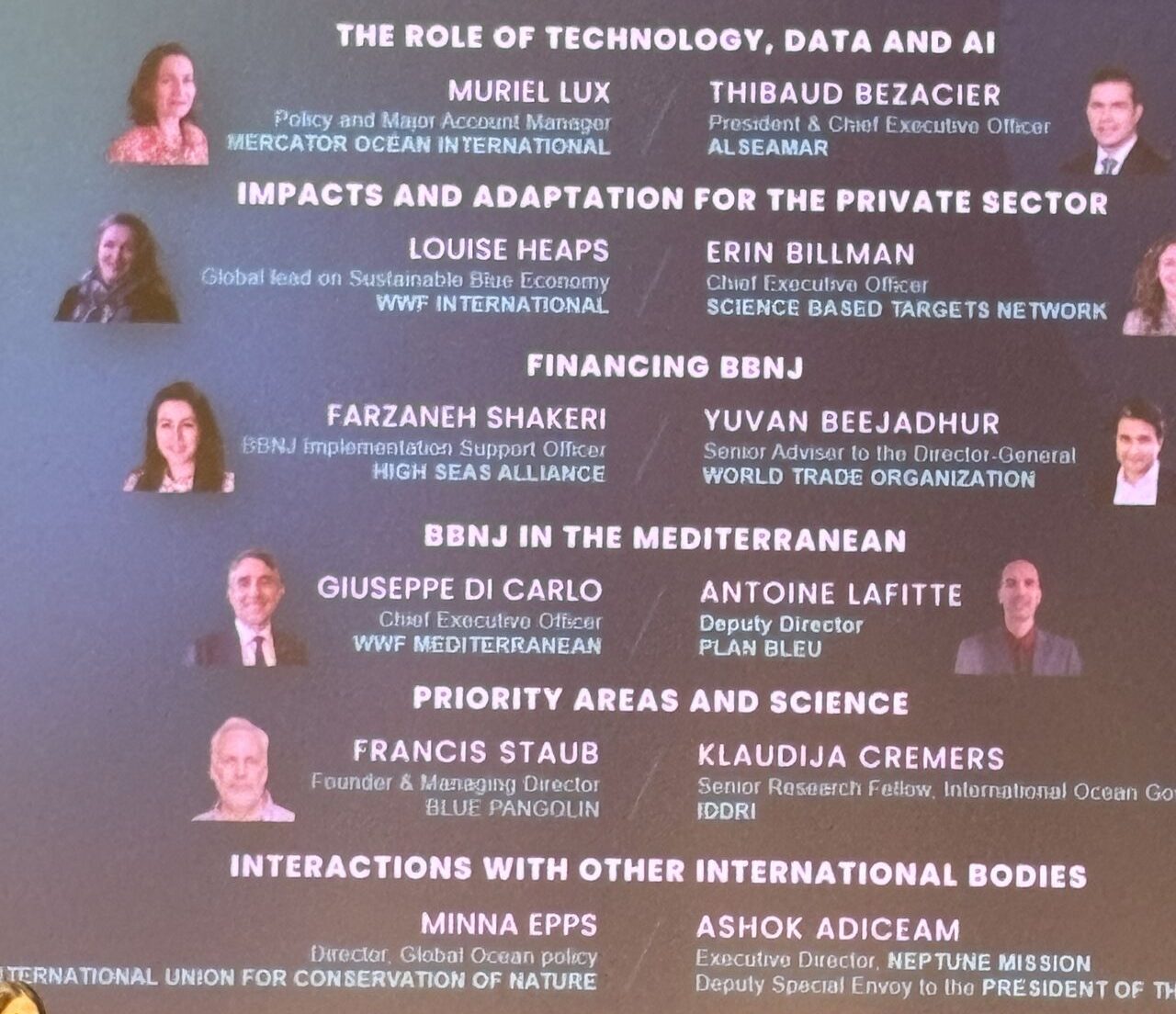
- The role of technology, data and AI, moderated by Muriel L.
- Impacts and adaptation for the private sector, moderated by Louise Heaps.
- Financing BBNJ, moderated by Farzaneh S. and Yuvan A. Beejadhur.
- BBNJ in the Mediterranean, moderated by Giuseppe Di Carlo and Antoine Lafitte.
- Interaction with other international bodies, moderated by Minna Epps and Ashok Adicéam.
- Priority areas and science, co-moderated by Francis alongside Klaudija Cremers of the Institute for Sustainable Development and International Relations (IDDRI).
The table format encouraged focused, practical exchange on the issues that will shape the early implementation of the Agreement, from the science and technology underpinning area-based management to the financing mechanisms and institutional arrangements needed to support it.
High-level Conference on RFMOs and the BBNJ
An important, ongoing discussion
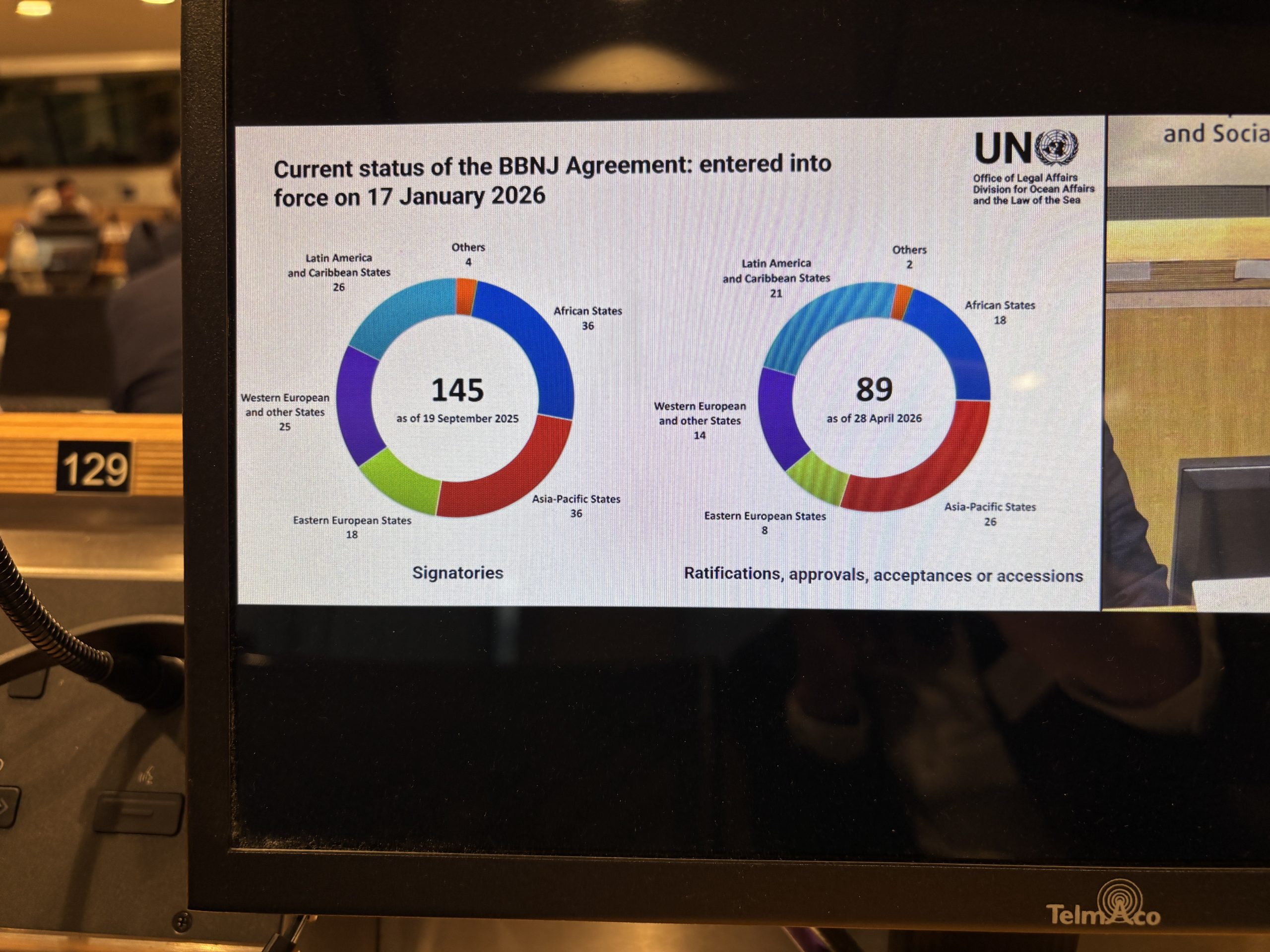
The BBNJ Agreement entered into force on 17 January 2026, opening a new phase in the governance of the ocean beyond national borders. Its arrival has sharpened a long-anticipated question: how a new global instrument will sit alongside the regional bodies that have managed fisheries in areas beyond national jurisdiction (ABNJ) for decades.
The dialogue falls between PrepCom III and the first Conference of the Parties (COP1), now anchored to early 2027. The Agreement does not undermine, and urges cooperation and complementarity with IFBs, yet much of the operational detail remains to be worked through, including consultation, data-sharing, environmental impact assessments and area-based management. Against that backdrop, there is growing recognition that early and informal dialogue between the fisheries and environment communities is essential. The event was to surface both the opportunities and the practical challenges ahead.
A full day of rich exchange
Following opening remarks and keynote interventions from the United Nations Division for Ocean Affairs and the Law of the Sea (DOALOS) and the Food and Agriculture Organisation (FAO), the day was structured around four moderated sessions, each addressing a different dimension of the RFMO-BBNJ interface:
- How biodiversity outcomes already being delivered by RFMOs in areas beyond national jurisdiction can be better recognised by the BBNJ processes.
- How effective cooperation between RFMOs and the BBNJ can be supported, including within public authorities.
- How data, science and technical expertise can be shared between RFMOs and the BBNJ.
- How trust can be strengthened to support shared understanding and effective cooperation.
Overall, the sessions offered a valuable indication of where the practical questions lie as implementation begins, from the recognition of existing measures and the role of environmental impact assessment, through to data-sharing and the foundations of trust between the fisheries and environment communities.
Tom’s attendance at this high-level forum was crucial for informing future efforts in relation to the BBNJ Agreement, and to listen directly to how RFMOs, UN bodies, the European institutions, Member States and the fisheries sector are approaching the BBNJ interface at this early stage, and to understand the practical considerations that will shape future cooperation.
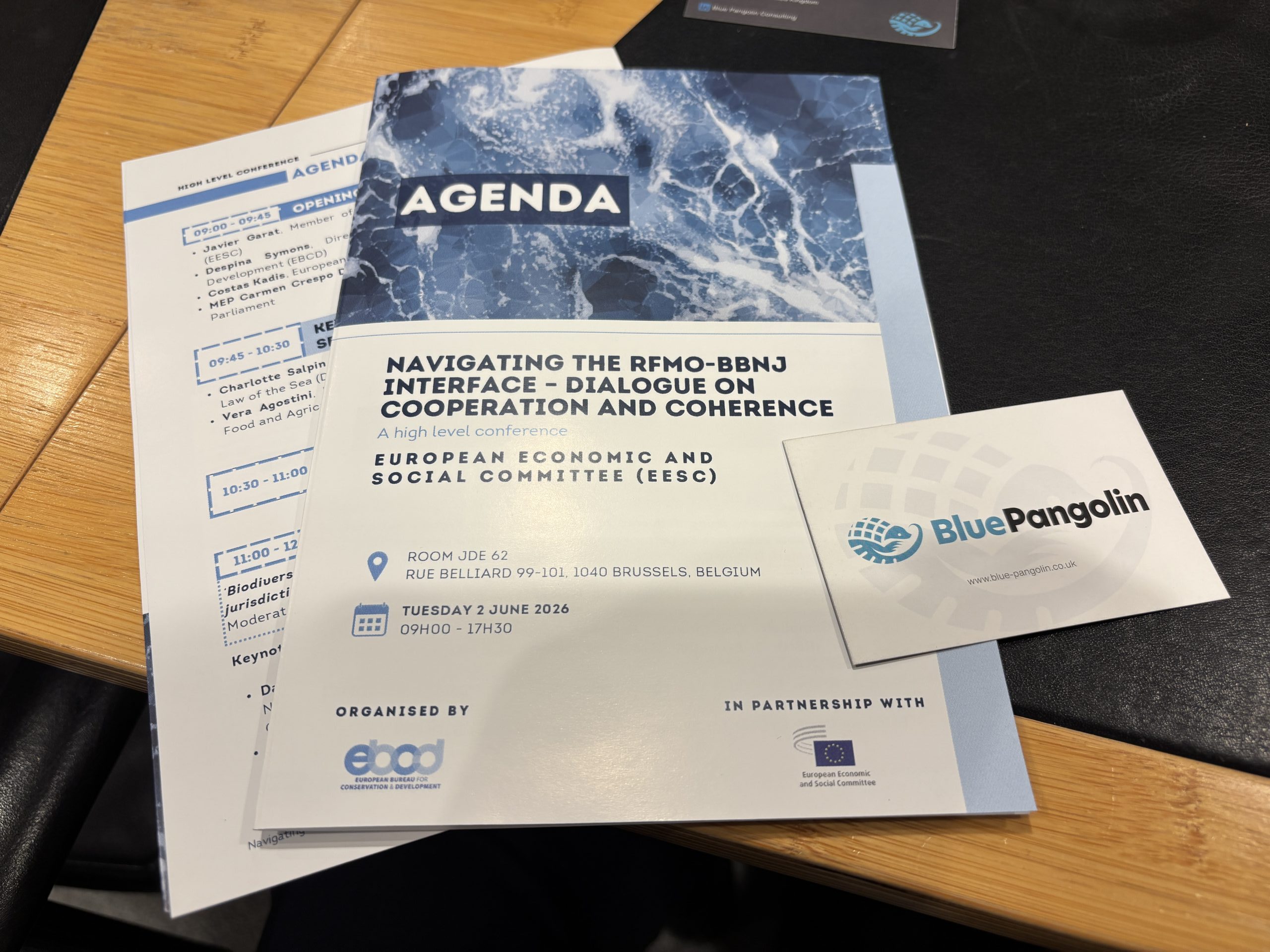
Francis and Tom’s participation in these dialogues is directly relevant to our current work on area-based management, ocean governance and international policy, where the interaction between the BBNJ Agreement and existing frameworks and bodies is a central consideration. The productive discussions and considerations during these high-level dialogues are of particular importance to our leading implementation of a “Study on supporting and developing draft proposals for high seas area-based management tools and marine protected areas for an efficient implementation of the BBNJ Agreement“, delivered under an EU-funded Single Framework Contract supporting the early implementation of the BBNJ Agreement. Forums such as the Monaco Blue Initiative and the RFMO-BBNJ dialogue allow us to listen directly to the institutions and communities involved, strengthen the connections on which effective implementation depends, and ensure the realities of ongoing discussions are well reflected in our work.