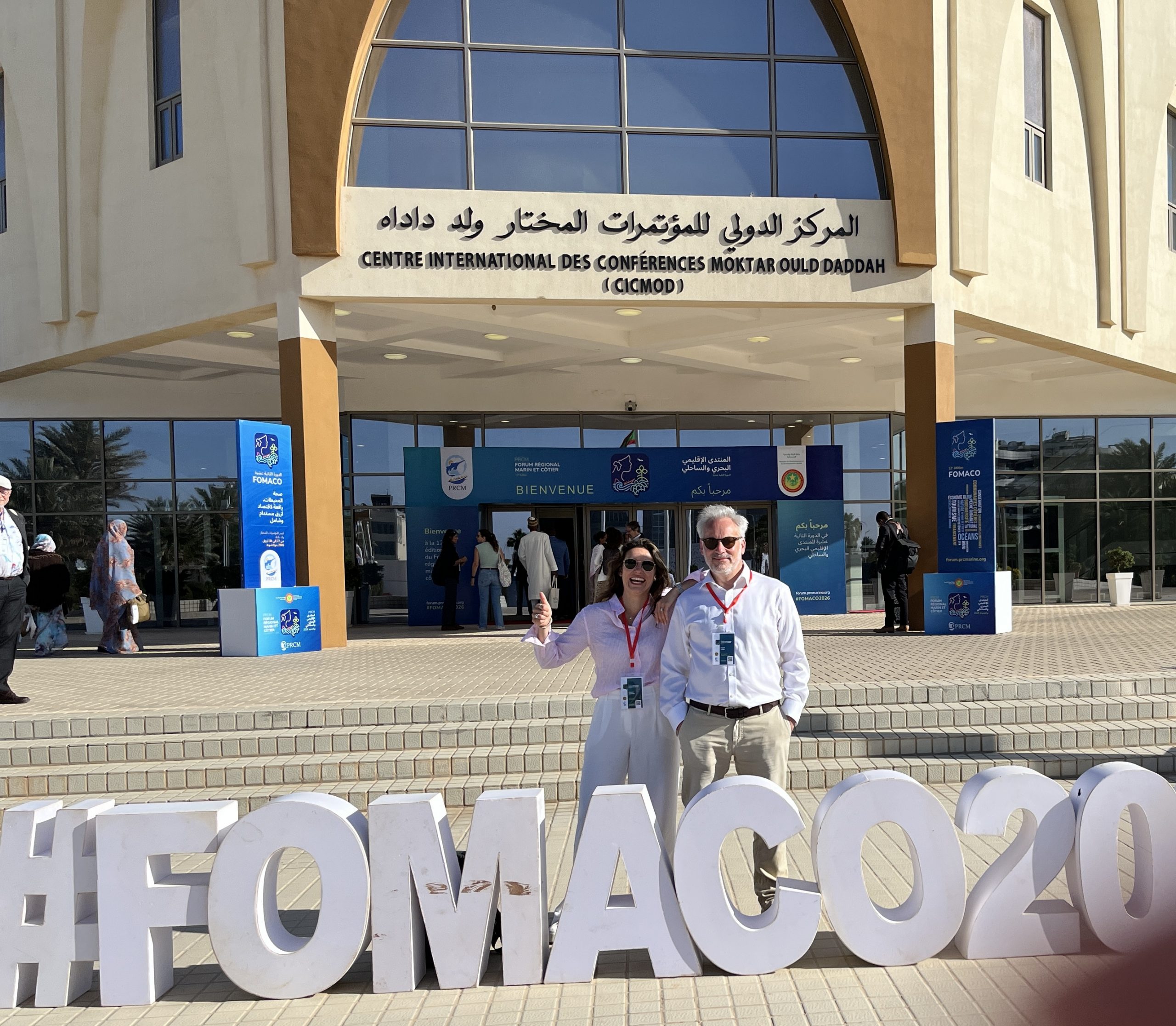
Blue Pangolin Consulting, represented by Francis and Margaux, took part in the 12th Regional Marine and Coastal Forum (FOMACO), 27 – 30 April 2026, Nouakchott, Mauritania, organised by the Regional Partnership for Coastal and Marine Conservation in West Africa (PRCM). FOMACO is West Africa’s key gathering for marine and coastal conservation and brought together policymakers, scientists, NGOs, communities, private sector actors and donors to exchange knowledge and develop sustainable solutions for marine and coastal governance. For over 20 years, the Forum has contributed to strengthening shared governance, raising awareness of issues related to marine and coastal biodiversity, and promoting sustainable practices in natural resource management.
Throughout the Forum Blue Pangolin Consulting contributed to discussions around the implementation of the BBNJ Agreement, with a key focus on the development of Area-Based Management Tools (ABMTs), including marine protected areas (MPAs), in areas beyond national jurisdiction (ABNJ) to help meet the global target of protecting 30% of the ocean by 2030 (30×30).
On behalf of the European Commission, Blue Pangolin Consulting led a consultation on Advancing ABMTs in West Africa: Knowledge Sharing and Action. This session brought together key stakeholders form the region to better understand the key priorities, challenges, and opportunities, spanning both scientific and governance dimensions to support effective implementation of the BBNJ Agreement.
The Forum also provided an opportunity for Blue Pangolin Consulting to engage in a series of bilateral meetings with key regional and international partners, including the Abidjan Convention, Oceans 5, the Global Environment Facility (GEF), Bird Life International, IUCN, Tara Ocean Foundation, BBNJ Focal Point for Sierra Leone, and the Government of Mauritania, among others. These exchanges helped strengthen collaboration, align priorities, and explore opportunities for joint action in support of ocean governance and high seas conservation in West Africa.
The forum underscored West Africa’s growing leadership in ocean governance, with many countries in the region having already signed or ratified the BBNJ Agreement. Discussions also focused on a proposed high seas MPAs in the Canary–Guinea current region, a highly productive ecosystem that supports biodiversity, fisheries, and food security for millions of people. Participants emphasised the need for stronger scientific data, increased capacity, and inclusive approaches that integrate local and Indigenous knowledge. The importance of regional cooperation and coordinated action was also highlighted, including collaboration through initiatives such as the BBNJ High Ambition Coalition.
Additionally, Blue Pangolin Consulting actively attended and contributed to several key side events. These included Capacity Building for a Vibrant Open Ocean (IUCN), which explored strategies to strengthen technical and institutional capacity for high seas governance, and the Roundtable on a Resilient and Connected Network of Marine Protected Areas on the High Seas in West Africa (Office français de la biodiversité (OFB)), which focused on advancing regional coordination and connectivity of marine protected areas in areas beyond national jurisdiction.
It was also encouraging to see strong momentum and engagement around the West Africa Sustainable Ocean Programme (WASOP) throughout the Forum. WASOP supports the development of a sustainable and inclusive blue economy while promoting the preservation of marine resources, addressing key regional challenges such as overfishing, biodiversity conservation, climate change, and sustainable development. Blue Pangolin Consulting played an early role in shaping this initiative, having developed the original concept note (action document) several years ago. The prominence of WASOP in discussions at FOMACO highlighted both its continued relevance and the growing commitment across the region to advance coordinated, long-term ocean sustainability efforts.
Blue Pangolin Consulting’s participation at FOMACO reflects its ongoing commitment to supporting governments and partners in translating global ocean commitments into concrete, on-the-ground action.
Field Visit: WACA Coastal Resilience Interventions
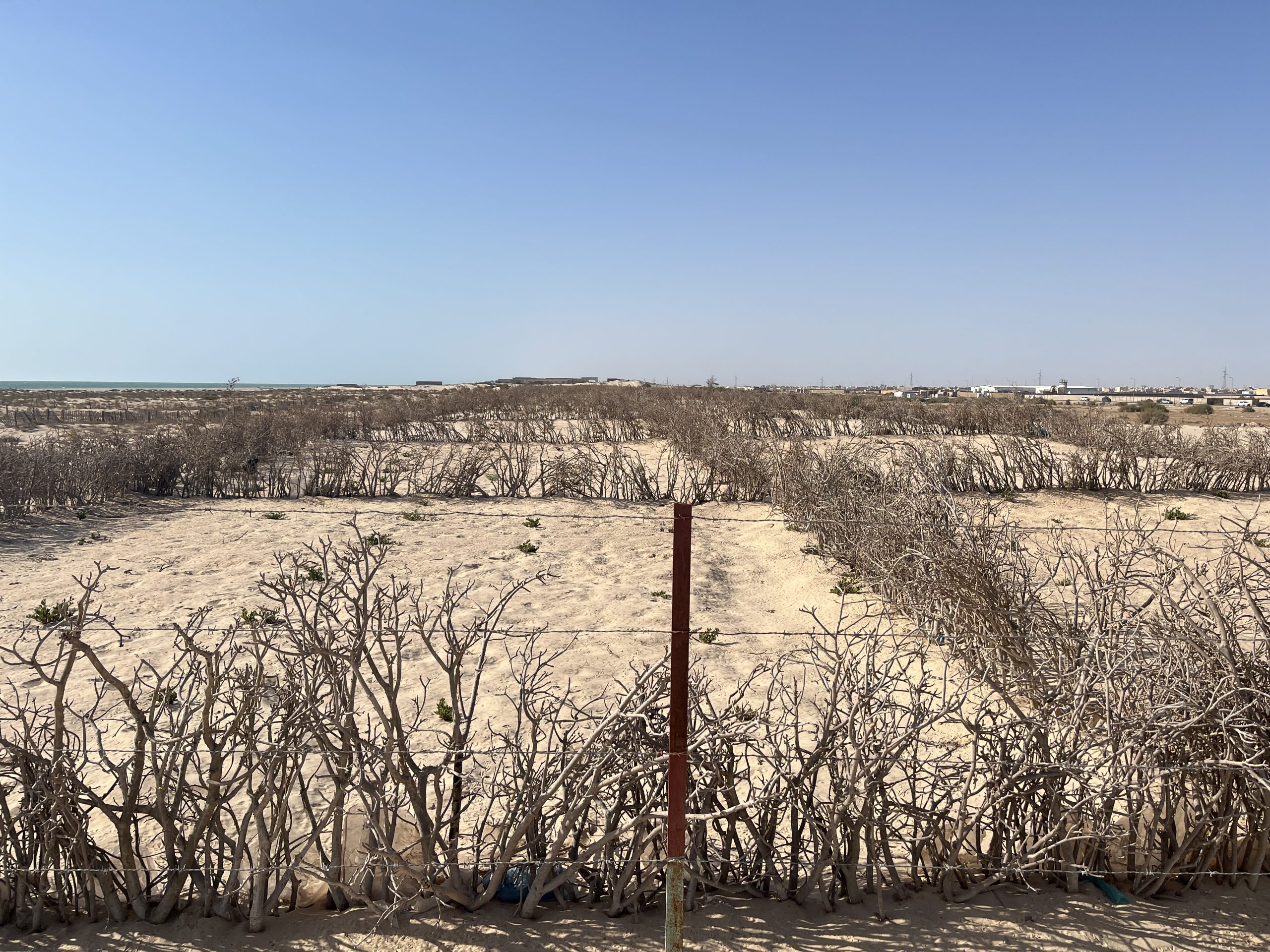
Nouakchott, is one of the most climate-vulnerable capitals along the West African coast, and faces increasing threats from sea-level rise and coastal erosion. A tidal wave in 1997 exposed the fragility of the coastline, and since then, uncontrolled sand extraction has significantly degraded the natural dune barrier, particularly in the districts of Sebkha, Tevragh Zeïna, and El Mina. To better understand local coastal challenges in Mauritania, the team visited a dune restoration site under the West Africa Coastal Areas (WACA) programme, funded by the World Bank.
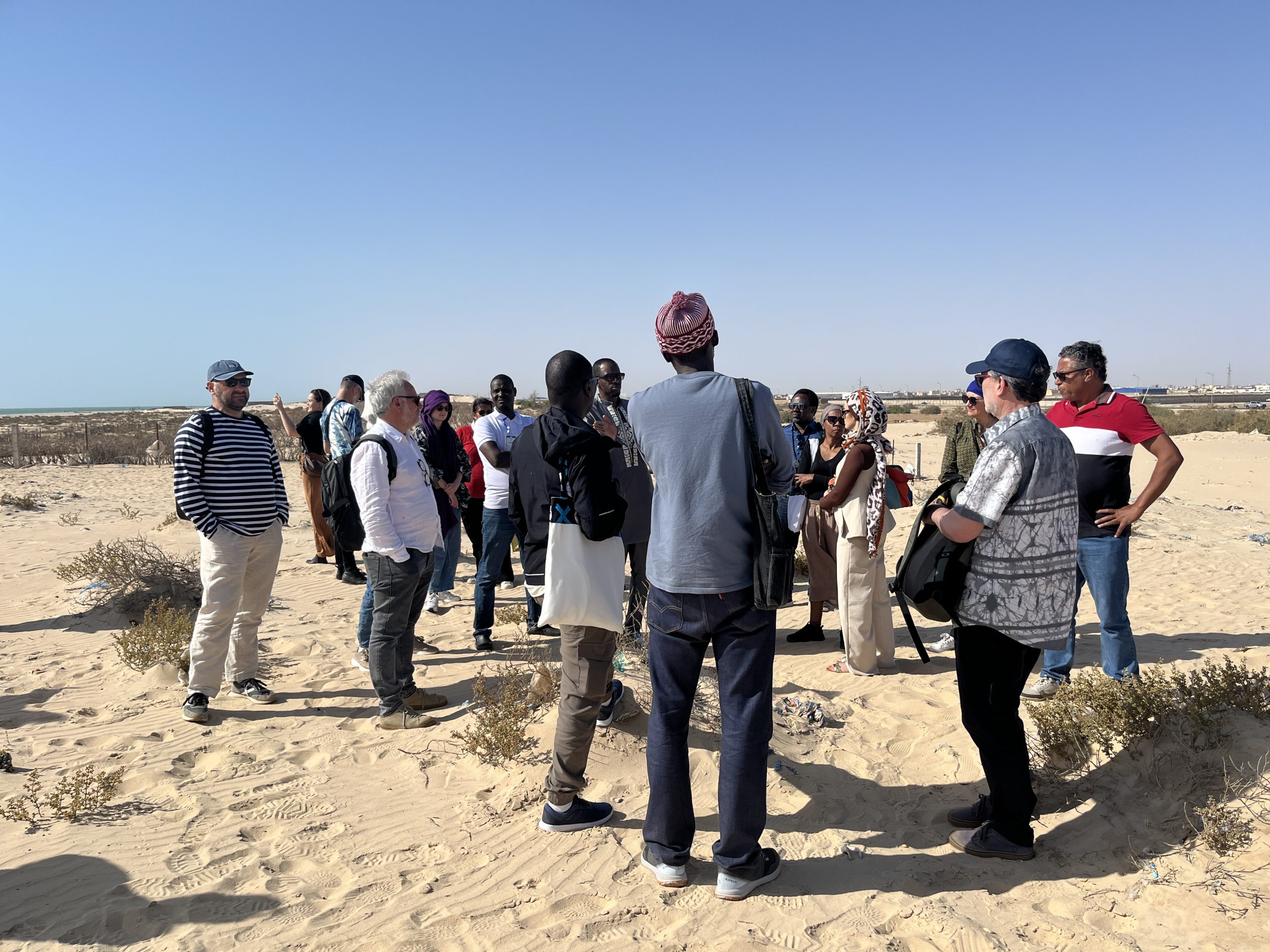
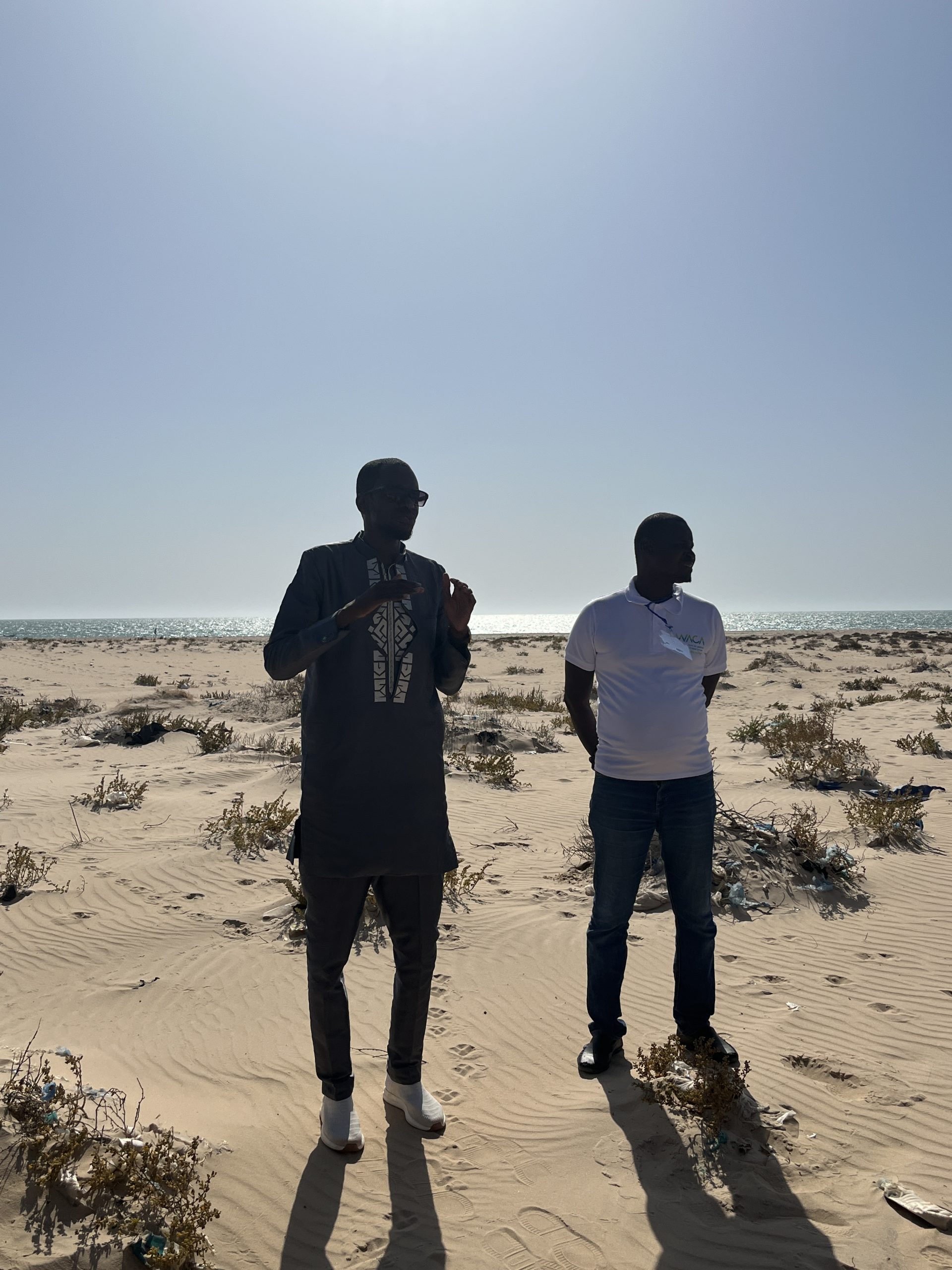
The visit was led by Djibril Ly, Government of Mauritania who explained that the WACA project had identified 21 breaches along Nouakchott’s coastline, three of which are considered critical. Current measures include both biological and mechanical dune stabilisation, as well as the closure of the most severe breaches. A crossing structure is also being constructed to reduce marine intrusion and stabilise sediments, forming part of a broader multi-sectoral investment plan to protect the city.
One of the programme’s priority interventions is the reinforcement of the coastal dune cordon that protects Nouakchott. This involves sand replenishment and stabilisation through vegetation, combined with access management to prevent further degradation.
To better understand some of the local coastal challenges in Mauritania, the team visited the WACA dune restoration site.
Port de Pêche
The team also visited the Nouakchott Fish Market (Port de Pêche), the bustling economic heartbeat of Mauritania’s capital. Located along the Atlantic coast, the market offers a vivid immersion into local life, with hundreds of brightly painted wooden pirogues lining the shore, lively auction scenes, and a remarkable diversity of freshly landed fish. The visit provided valuable insight into the central role of small-scale fisheries in supporting livelihoods, food security, and the local economy, while also highlighting the close connection between coastal communities and the marine environment.
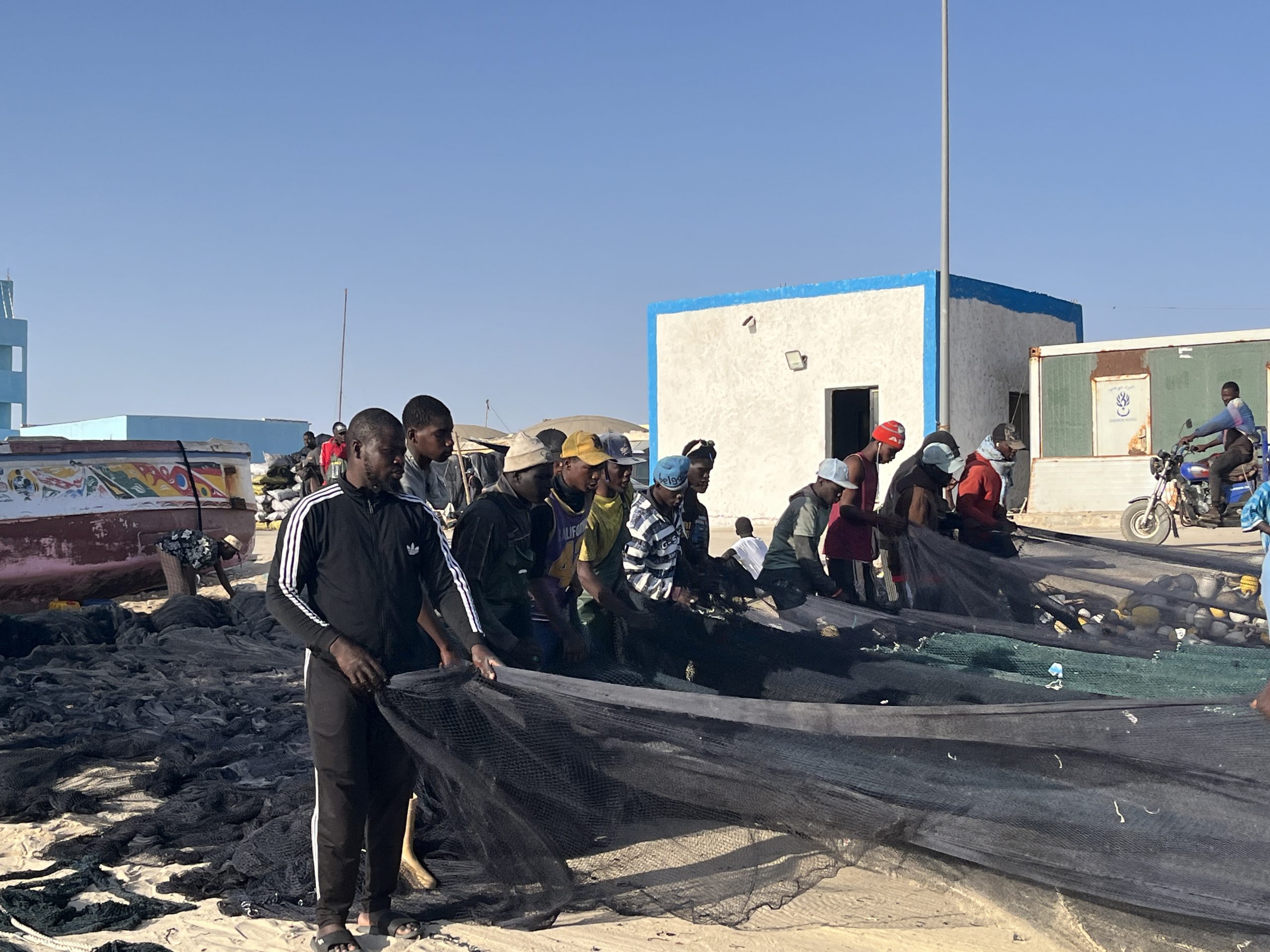
These field visits were essential in grounding discussions from the Forum in real-world context. Visiting the WACA dune restoration site provided first-hand insight into the scale and urgency of coastal erosion and climate risks facing Nouakchott, as well as the practical challenges and solutions involved in strengthening coastal resilience. The visit to the Port de Pêche complemented this by illustrating the socio-economic importance of marine ecosystems, highlighting how coastal communities depend on healthy ocean resources for their livelihoods and food security. Together, these experiences reinforced the critical link between ocean governance, climate adaptation, and the well-being of coastal populations.
Sixth International Marine Protected Area Congress (IMPAC-6)
The 6th International Marine Protected Area Congress (IMPAC-6) was also highlighted during the forum as an important upcoming milestone for the global MPA community. Taking place in 2027, it will mark the first time this global gathering is hosted on the African continent, bringing together MPA managers, scientists, institutions, and financing partners. IMPAC-6 will provide an important platform to share lessons from field implementation and help shape the future direction of the global ocean agenda. It also presents a critical opportunity to ensure that high seas are fully represented in discussions, particularly as efforts to operationalise the BBNJ Agreement and expand area-based conservation measures accelerate worldwide.