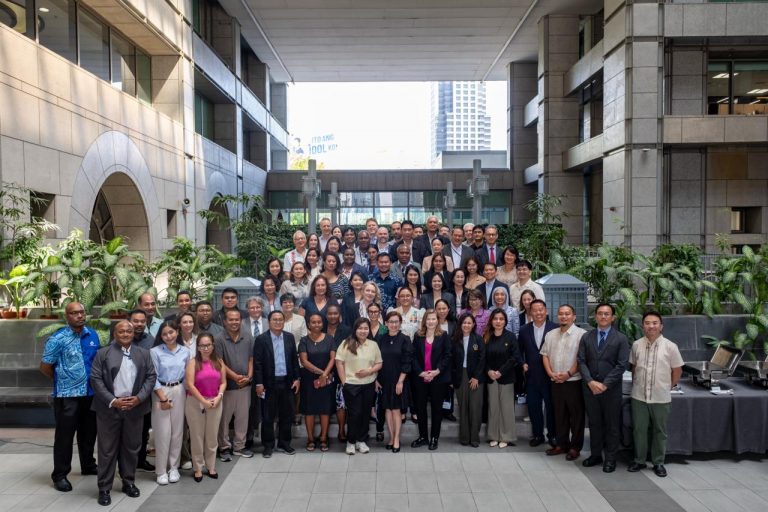
Regional partners, government representatives, and technical experts convened last week at the headquarters of the Asian Development Bank in Manila, Philippines for the final stakeholder workshop of the project “Building Coastal Resilience through Nature-Based and Integrated Solutions: Risk Financing and Insurance Solutions for Coastal Resilience.”
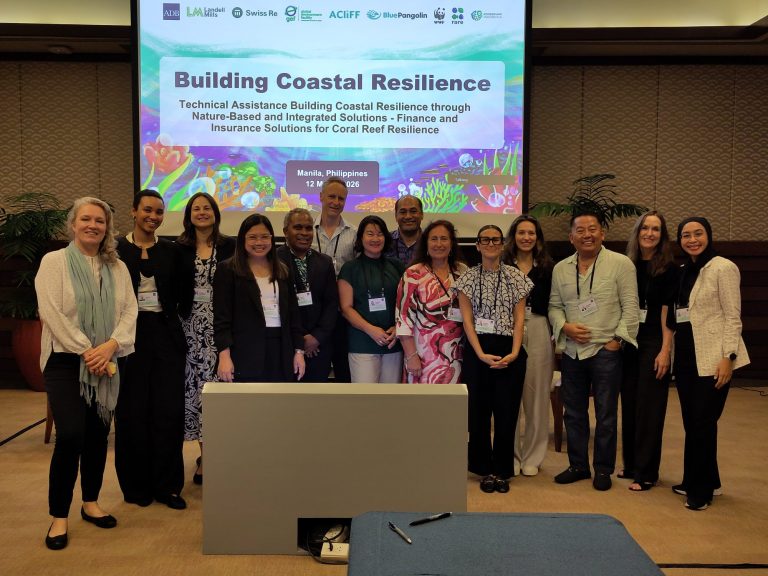
The two-day workshop, held on 11- 12 March, marked a key milestone in the regional technical assistance initiative, which is supporting innovative financial mechanisms to protect coral reefs and strengthen coastal resilience across Asia and the Pacific.
Led by Landell Mills and supported by a consortium of partners, the project has worked with stakeholders in Indonesia, the Philippines, Solomon Islands, and Fiji to assess the feasibility of new financing approaches for coral reef conservation, restoration, and risk management. These approaches include conservation trust funds and innovative insurance tools designed to mobilise funding before and after climate-related disasters.
Presenting new tools for coral reef finance
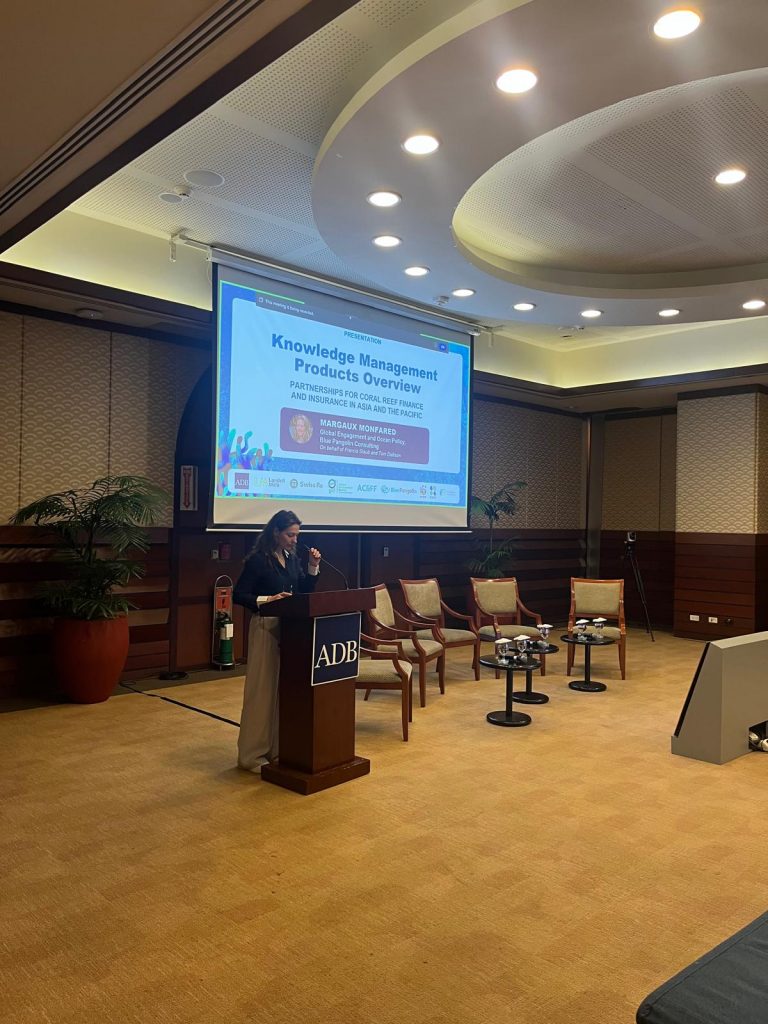
Among the contributors was Blue Pangolin Consulting, represented by Margaux, who presented the knowledge management products developed throughout the project. She attended on behalf of colleagues Tom and Francis, and presented knowledge management products designed to capture and disseminate key thematical topics, including coral restoration and reef resilience, complex concepts such as parametric insurance and risk transfer in coral reef systems, and lessons learnt from the initiative to support knowledge sharing across regional, national and local scales.
Francis (Events, Capacity Development and Training Specialist) and Tom (Knowledge, Learning and Communications Coordinator), alongside National Knowledge Management experts from Indonesia, Philippines and Fiji, developed four knowledge products for the project:
- An explainer video on coral reefs and parametric insurance;
- Three national-level parametric insurance primer videos;
- Six topical factsheets including coral restoration, parametric insurance and sustainable financing mechanisms; and
- A training toolkit to translate complex topics into practical capacity development sessions.
The presentation, delivered by Margaux, highlighted how structured knowledge products can help policymakers, insurers, and conservation practitioners better understand and implement financial solutions for reef resilience.
Read more about the project and Blue Pangolin Consulting’s role on the project’s page here.
From research to implementation
The workshop focused on the collective approach taken to build the case for disaster risk financing and risk transfer mechanisms for coral reefs. Key components of the project’s methodology included:
- Identifying priority reef sites for intervention
- Conducting vulnerability and climate risk assessments
- Developing restoration plans and budgets
- Undertaking valuation and cost-benefit analyses
- Assessing enabling policy and financial environments
- Designing financing models for risk transfer and resilience investments
- Establishing conservation trust funds
- Exploring parametric insurance solutions for rapid post-disaster response
Participants also reviewed country-specific findings, examining opportunities and challenges for implementing financing mechanisms in each project location.
Regional scaling and next steps
Discussions during the final sessions centred on lessons learnt from the four pilot countries and how these approaches could be scaled across the Asia-Pacific region. Participants explored pathways for national adoption, regional cooperation, and private-sector engagement to ensure long-term and sustainable financing for reef protection.
The workshop concluded with a call for clear next steps and stakeholder commitments to advance implementation, translating project insights into practical action for coral reef conservation and climate resilience.
Coral reefs provide vital ecosystem services, from fisheries and tourism to coastal protection, yet remain highly vulnerable to climate change and extreme weather events. By integrating nature-based solutions with innovative financial instruments, the project aims to strengthen resilience of both reef ecosystems and the communities that depend on them.